Raising a Sale Yearling — Horse Breeding & Mare Care in Oklahoma | Oak Grove Veterinary Hospital

Small animal + equine care in Coweta

Talk with our team: 918-486-VETS

Home › Equine Reproduction › Raising a Sale Yearling

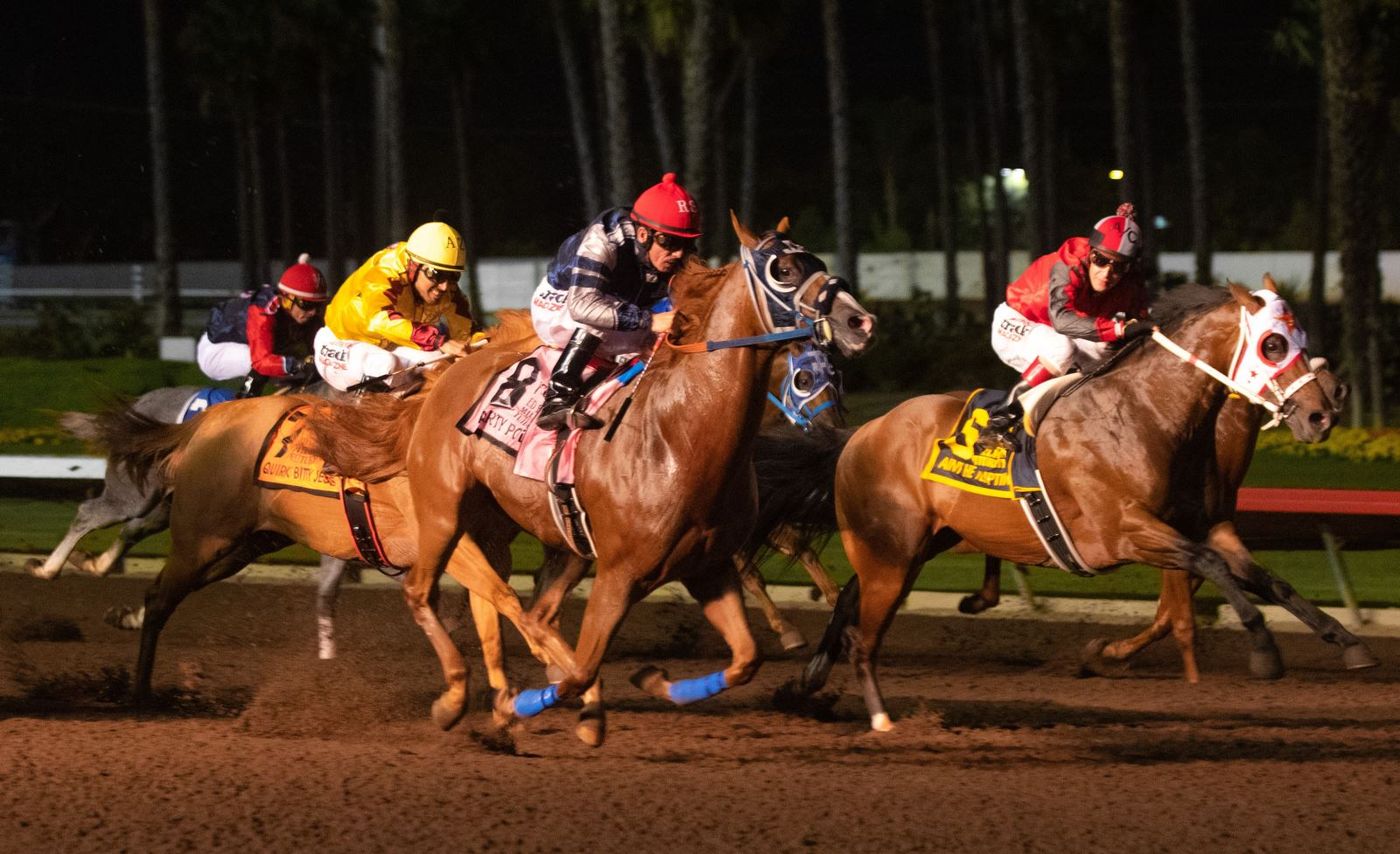
Party Politics, the number 8 horse, driving to the finish under the lights at Los Alamitos
Oak Grove Veterinary Hospital · Coweta, Oklahoma

The Long Road to the Sale Ring

Celebrating 30 Years — Serving our community
since 1996

Raising a racing Quarter Horse yearling that can pay its way — the mare, the foal, the two years of care nobody sees, and the set of radiographs that can rewrite the ending.

Party Politics winning at Los Alamitos — one of the horses on this page. Photo by William Zuazo / Los Alamitos Race Course.

Before a yearling ever walks into a sale ring, there are two-plus years riding on it: a season of mare care, a stallion fee, a year of veterinary breeding work, a foaling, and then eighteen months of feed, care, and labor. The breeder standing at the rail isn't really selling a horse. He's trying to recover everything it took to make one — and most of that money is spent long before anyone knows whether the horse can run.

That is the part of this business that never makes the catalog page. Keeping a foal alive, sound, and growing from the day it's conceived to the day it's sold is a long chain of small decisions, and the chain breaks at its weakest link — a missed vaccine window, a parasite load that quietly steals a summer of growth, a crooked leg nobody corrected while correction was still possible. And at the very end of the chain sits one set of radiographs, taken inside a month of the sale, that can confirm everything you did right — or surface the one problem you could never see from the outside.

This page walks that whole road, start to finish, the way we work it at Oak Grove: what can be controlled, what can only be caught early, and what to do when the films don't come back clean.

2+ yearsof mare care, breeding work, and raising stand behind every yearling in the ring
30 yearsof equine reproduction work led by Dr. Jay Ross, co-founder of the practice in 1996
$3.74 millionin combined earnings of the nine horses named on this page — every one produced or managed under this program

The arc, start to finish

Every stage below is a place where money is spent — and a place where the right work, done on time, protects everything spent before it.

  1. 1The MareBreeding soundness, cycle work, embryo transfer or a mare carrying her own
  2. 2FoalingMonitored delivery, passive transfer checked, plasma where it's needed
  3. 3The First MonthLegs watched daily — the window to correct, not just manage
  4. 4Growing SeasonVaccines, parasite control, nutrition, lung scans and bloodwork
  5. 5Weaning FilmsRadiograph the weanling — a work list, not a verdict
  6. 6Sale FilmsRepository radiographs inside a month of the sale
  7. 7The DecisionSell, keep, or partner — with the whole ledger on the table
CHAPTER ONE

It starts with the mare

Every yearling begins as a decision about a mare, and there are really only two ways that decision plays out. She may carry her own foal — bred, settled, and brought to term herself, the oldest arrangement there is. Or she may be a donor mare — contributing the genetics, as an oocyte or as an embryo depending on how she is set up to donate, while another mare does the carrying. That second mare is the recipient mare, selected and synchronized to receive the donor's product and raise somebody else's genetics as her own pregnancy. The recip isn't a third scenario; she's the carrying half of the donor scenario. We manage both arrangements, and the work is different for each: breeding soundness examinations, cycle management, insemination timing, embryo flush and transfer, recipient selection, and then eleven months of care for whichever mare is doing the carrying. Part of that care is loading the colostrum before the foal ever takes it: in the last stretch of pregnancy, whichever mare is carrying — the mare with her own foal, or the recip with a donor's — gets the rotavirus series at eight, nine, and ten months of gestation, repeated every pregnancy, so the colostrum she is building carries anti-rotavirus antibody into the foal's first weeks of life, when rotaviral diarrhea hits hardest and hits youngest.

It is unglamorous work and it is where the ceiling gets set. The quality of everything downstream — the foal's start, its growth, its soundness, its shot at the sale ring — is capped by what gets done here. A mare shorted on nutrition, a cycle managed loosely, a recip chosen carelessly: none of that shows up as a line item. It shows up two years later, in a smaller, later, lesser yearling, and by then there is no going back to fix it.

The yearling is made — or quietly unmade — a full two years before anyone leads it into the ring.

CHAPTER TWO

The first month decides more than people think

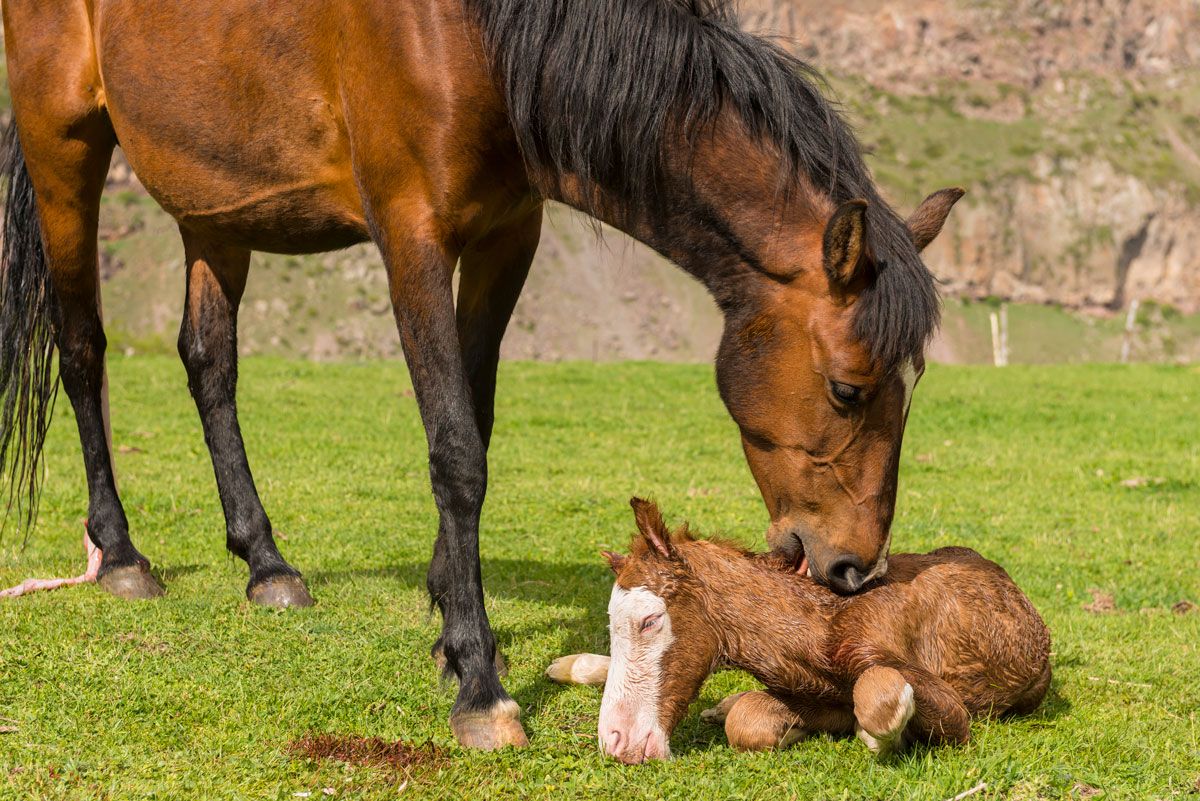
A mare nuzzling her newborn foal, still wet from birth, lying in green pasture
The first hours set the terms: a monitored foaling, a foal up and nursing, and immunity checked before the environment gets a vote.

Foaling is monitored — not discovered in the morning. A foal that gets into trouble in its first hours, a mare that retains a placenta, a dystocia caught twenty minutes late: these are the losses that never appear in anyone's statistics, just in an empty stall where a yearling was supposed to be.

Once the foal is here, the first medical question is passive transfer — did the foal get the mare's antibodies through colostrum, in time, in enough quantity? We check it, and the number is worth knowing: it tells you what you've got. But the real bang isn't in the measurement. It's in what you can do at or before that measurement is even possible — starting at the foal's first suckle, you have the opportunity to directly influence that foal's immunity by giving high-gamma plasma, and that has come to be the gold standard.

High-gamma plasma can be given as a straight high-gamma product, or it can be catered to what you're actually worried about — hyperimmune plasma targeted at a specific threat, whether that's West Nile, Rhodococcus equi, rotavirus, or another pressure that farm carries. Given early enough, it can head off and thwart a great deal before the foal has ever absorbed its colostrum, or while that colostral antibody is still being absorbed — and that timing can be a game changer.

The reason is the newborn gut itself. In those first hours the gastrointestinal tract is wide open, built to pass large molecules — macromolecules — straight across the gut barrier and into the bloodstream. That is how the colostral antibodies the mare produces from her own environmental exposure, boosted by the pre-foaling vaccines you gave her, get into the foal to help carry it through its first year of life. But that same open door works both ways: everything that goes into the foal's mouth in that window is also a potential source of infection, able to transfer across the same barrier. Plasma placed in the foal ahead of, or alongside, that absorption gives immunity a head start through the very hours when the foal is most open to everything — the protection and the threat alike. That early immune support is some of the cheapest insurance in the whole two-year program.

Then: the legs. Angular limb deformities are a first-two-weeks-to-first-month problem. Foals are born crooked more often than the sales photos suggest, and in those early weeks the growth plates are still responsive — periosteal work, corrective trimming, and managed exercise can genuinely change the foal's conformational outcome. Wait until the foal is three or four months old and the same legs are no longer a correction; they're a management plan, and eventually a line in a buyer's vet report. The window is short, it opens at birth, and it does not reopen.

CHAPTER THREE

Keeping them alive, healthy, and growing

Between foaling and the fall of the yearling year sits the longest stretch of the program — and the one where yearlings are most often lost a little at a time. Not dramatically. Just a foal that scours and loses a month, a weanling carrying a parasite load that eats his growth, a respiratory infection that smolders below the threshold of a cough. A foal that loses ground in the summer rarely gets all of it back by sale day.

The program that prevents it is deliberately unglamorous, and it is fitted to the individual and the farm rather than copied off a wall chart:

  • Vaccination protocols built for the mare, the foal, and the weanling, timed to the disease pressure of the place they actually live — not a generic schedule.
  • Parasite control with intent: which product, at what age, in what rotation, and for which group — mares, recips, weanlings and yearlings each carry different risk.
  • Nutrition at every stage — the lactating mare, the recipient mare, the weanling learning to eat on its own, and the yearling being grown toward a sale without being pushed into the developmental problems that come from growing too fast.
  • Periodic lung ultrasound to scan the lung fields for the consolidations and abscesses that a foal can carry without ever looking sick.
  • Periodic CBC and SAA bloodwork — a complete blood count and a serum amyloid A inflammation marker — to catch subclinical disease while it is still a treatment decision instead of a condition loss.

None of this is exciting. All of it is the difference between a crop of yearlings and a crop of stories about what the yearlings were going to be.

CHAPTER FOUR

Weaning: the first look inside

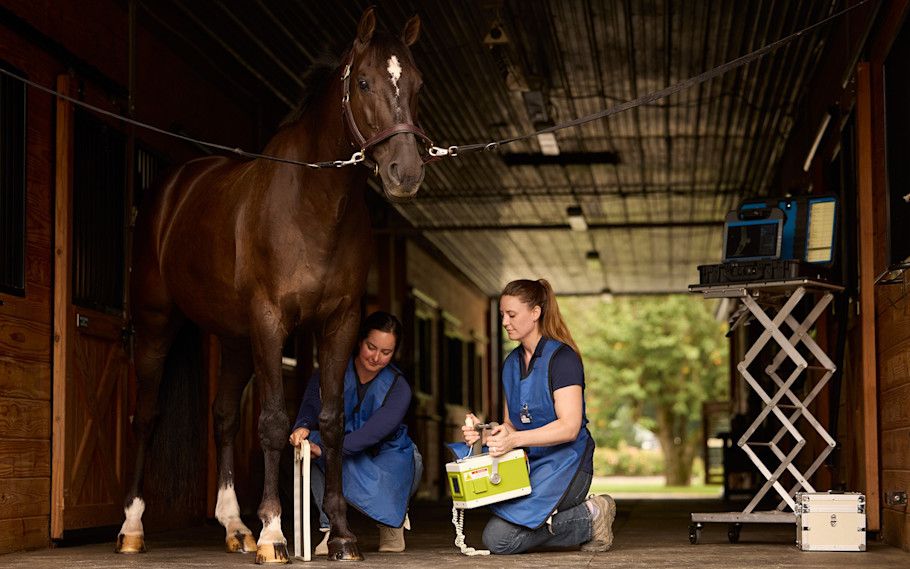
A veterinary team positioning a portable radiograph unit at a horse's front leg in a barn aisle
Radiographs are the only honest look at what's happening inside a growing joint. Taken at weaning, they come with a year of runway.

Here is the step too many programs skip — and the one this page most wants to argue for. Once the foal is weaned, halter broke, and handleable, radiograph the weanlings. Not at sale time. At weaning.

What you find then — early OCD lesions and other developmental orthopedic issues — you find with a full year of runway in front of you. There is time for joint therapy and biologics: intra-articular stem cells, hyaluronic acid, systemic products that support cartilage repair. There is time to adjust nutrition and growth rate. There is time for a lesion to declare itself — to progress, to stabilize, or to settle into something a buyer can live with — while you watch it on a schedule instead of discovering it on a deadline.

The same finding at sale-radiograph time is a verdict. At weaning, it's a work list.

Early films don't just buy treatment options. They buy honesty early, when honesty is still cheap — about which yearlings are on a normal track, which ones need a different plan, and which ones should never have a sale date circled in the first place.

CHAPTER FIVE

Sale radiographs and the reckoning

In the last month before the sale, the yearling is radiographed for the sale repository, and everything hidden comes out. This is the moment breeders describe with a word nobody uses about horseshoes: dread. Because an OCD doesn't have to be career-threatening to be expensive. Some lesions are significant and some are not — but nearly all of them move the price, and the price is the only mechanism there is for recovering two years of costs:

What the hammer price has to cover

  • Stallion feethe cost of the cross itself, paid before conception is confirmed
  • Breeding veterinary worka season of cycle management, insemination or embryo transfer
  • Mare careeleven months of gestation for whichever mare carries — the mare herself, or the recip carrying a donor's foal
  • Foaling & the first monthmonitored delivery, passive-transfer work, plasma, limb correction
  • Eighteen months of raisingfeed, pasture, labor, farrier, vaccines, parasite control, monitoring
  • Sale preparationfitting, handling, repository radiographs, consignment

The findings in that last set of films can dictate which sale a horse even belongs in — which market will still pay for it, and which won't. Sometimes they say there is no market at all without surgery and healing time, and the yearling you've poured two years and your soul into has to wait, heal, and be re-aimed at a different future. That is a hard day. It is a considerably harder day when the lesion was findable at weaning and nobody looked.

This is where a year of early work cashes in — or where its absence gets priced, in public, one hip at a time.

CHAPTER SIX

The hardest call: sell, keep, or partner

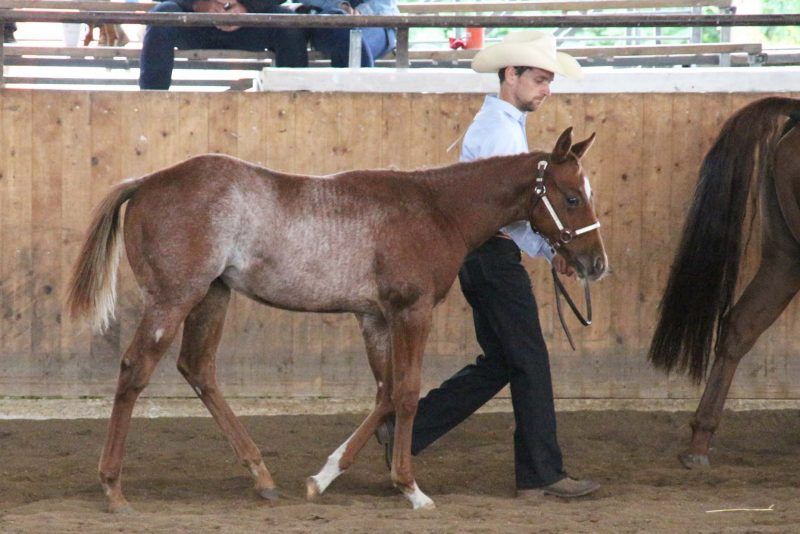
A young Quarter Horse being led in hand in an arena, presented the way a yearling is shown to buyers
A yearling presented in hand. When the market won't clear the number the owner has in the horse, the ring is not the only door.

Sometimes a yearling hedges toward the market — good enough to sell, not clean enough or fashionable enough to bring what the owner has in him. When the bidding won't clear the real number, selling anyway is not discipline; it's donating two years of work. There is another answer, and good horsemen have used it for generations: retain ownership, or partner with someone, and carry the horse into its racing career.

Run well, that horse does more than earn a purse. A race record builds the value of the whole family — the dam's produce record, the siblings coming behind, the stakeholder's position in future offspring. What the sale ring underpaid for in October, the racetrack can repay with interest, and the family you kept becomes worth more than the one check you turned down.

It is not the right answer for every horse, and it is never the right answer on sentiment. It's a decision to make with three things on the table at once: the radiographs, the expense ledger, and the pedigree. Helping owners read all three together — honestly, before the sale rather than after it — is a large part of what a breeding practice is for.

And sometimes the right answer is to be the buyer. Point Blank Range — produced here across three generations, then bought out of the yearling sale by 918 Bloodstock and raced to a graded derby title — closes out the proof below.

Our hand in it

This isn't theory. These are horses Oak Grove helped produce and manage for their owners — the Kelly / Yearsley / Yother breeding program — from the breeding shed and the foaling barn to the racetrack, under the same start-to-finish program this page describes. Combined earnings of the nine horses below: more than $3.7 million — and the last one on the page is still adding to it. Records verified against StallioneSearch, Equibase, and AQHA records, October 2026.

Party Politics winning under the lights at Los Alamitos

Party Politics

SI 94 · Gelding by Apollitical Jess out of Shanachee

$1,113,056Lifetime earnings · 6 wins

Winner of the Golden State Million Futurity (G1) and the Ed Burke Million Futurity (G1) at Los Alamitos, and the Golden State Derby (G2) — a million-dollar earner produced out of the Shanachee family, the cross with Apollitical Jess that this program kept coming back to because it kept working.

Bon Accord

SI 105 · Gelding by Shazoom

$821,4706 wins

Winner of the Remington Park Invitational Championship (G1) and the Go Man Go Handicap (G1), and second in the All American Derby (G1).

Celtic Emblem

SI 96 · Mare by Apollitical Jess out of Three Green Leaves, by Tres Seis

$577,3775 wins

Winner of the Easy Jet Stakes (RG3), second in the All American Derby (G1), and Oklahoma champion 3-year-old filly. Now a producer: her son Motiveighted earned $131,085 and placed in the Grade 1 Ed Burke Million Futurity.

Dutch Schultz

SI 99 · Grade 2 winner

$356,668

A graded stakes winner from the program's runners — one of the early proofs that the start-to-finish management on this page produces horses that hold up at the top level.

Answer The Dream

SI 99 · Mare by Tres Seis

$264,375Multiple stakes winner

Winner of the Juno's Request Stakes (G3) at Remington Park. Oak Grove produced offspring for her owners and managed the mare through the vast majority of her life; her family went on to produce World Champion FDD Dreams, earner of more than $2.18 million.

Nellie Delaney

SI 96 · Mare by FDD Dynasty out of Fleeting Touch

$211,3056 wins

Winner of the Southern California Derby (G1) and the Los Alamitos Winter Championship (G1). Now a producer herself — dam of Grade 1 winner Wynnchester.

Shanachee

SI 98 · Mare by Country Chicks Man

$124,478Graded stakes placed

The dam of Party Politics — and of O Donovan Rossa (SI 112, $432,169), a multiple graded stakes winner. A whole family of runners from one mare, managed through her producing career.

Fenian Faith

SI 97 · Mare by Apollitical Jess out of Three Green Leaves

$83,9704 wins · Graded stakes placed

Full sister to Celtic Emblem — second in the Remington Park Championship Challenge (G2), third in the Sooner State Stakes (G1). Already a proven producer: dam of 3 foals of racing age, 3 to race, 2 winners — Finn McOol (SI 94, by KVN Corona, $100,973, third in the Oklahoma Futurity [G2]) and Bernina Express (SI 90, by Freighttrain B, 2 wins at 2, finalist in the FL Lady Bug Stakes [RG3]), both racing for Planefun LLC under Dee Keener. Her next foal, by Dulce Sin Tacha, is due January 2027.

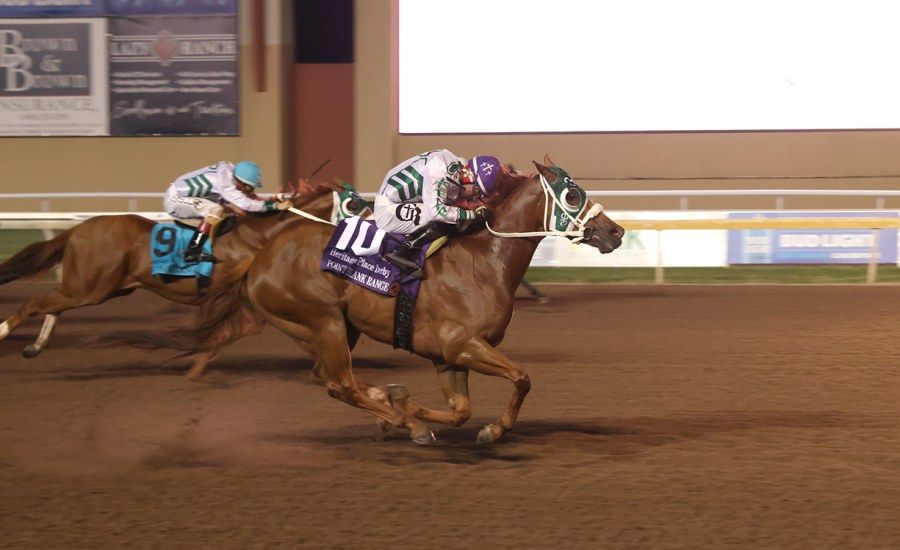
Point Blank Range, wearing number 10, winning the Heritage Place Derby at Remington Park
The full circle

Point Blank Range

Gelding by Tell Cartel out of Fannie Blankers, by Bodacious Dash · Bred by J. Garvan Kelly & J. Lloyd Yother · Now racing for 918 Bloodstock

$192,413Career earnings · Still racing

Three generations deep: Dr. Ross was the primary veterinarian on producing this colt's second dam, his dam Fannie Blankers, and then Point Blank Range himself for breeders Kelly and Yother — the start-to-finish work this page describes, carried across a whole family.

Then the story came back around. He sold through the yearling market, and 918 Bloodstock — in which Dr. Ross is a partner — bought him for $40,000 at the 2024 Ruidoso Select Yearling Sale. Campaigned by 918, he won the Heritage Place Derby (G2) at Remington Park on May 30, 2026, going undefeated in three starts at the meet, was voted Champion 3-Year-Old Male of the 2026 Remington Park meet, and ran as a finalist in the Rainbow Derby. Produced him, sold him, bought him, raced him — the whole road on this page, in one horse.
One page, one program, start to finish — and it isn't history. Point Blank Range is still racing in 918 Bloodstock's colors, and Fenian Faith already has runners at the track — Finn McOol and Bernina Express — with her next foal arriving in January 2027, the next product of the same mare management, monitored foaling, early leg work, and preventative program described above. The work this page lays out is the work being done in our barn right now.

Start the conversation before the radiographs, not after

Raising one to sell — or standing at the fork between selling, keeping, and partnering? The cheapest time to change a yearling's outcome is early: at the mare, at foaling, at weaning. That's when we can still help.

918-486-8387

Oak Grove Veterinary Hospital · 12949 South State Highway 51, Coweta, OK 74429
Equine reproduction and sports medicine led by Dr. Jay Ross · Practice co-founded 1996 by Dr. Ross and Dr. Holly Holland

Call 918-486-VETS